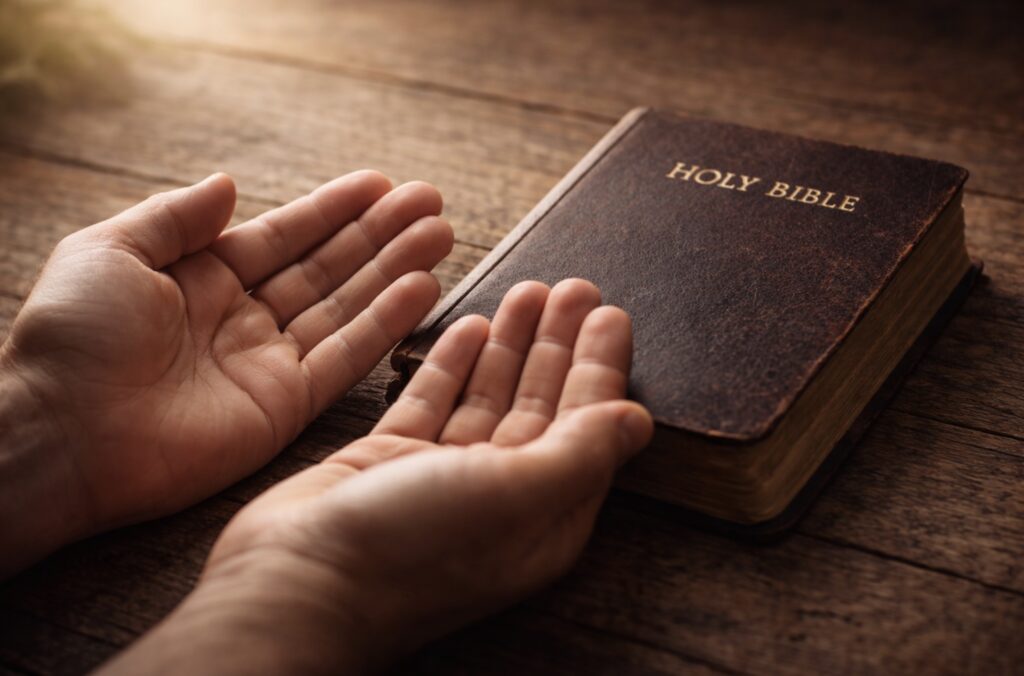
Word, Spirit, Promise, and Union
Stephen G Cantrelle
The Pattern Established at Creation: Word and Spirit
The opening lines of Scripture establish a pattern that governs all of God’s work—creation, redemption, and transformation alike. “And the Spirit of God was hovering over the face of the waters. And God said…” The Spirit of God was present, active, and poised, yet nothing happened until God spoke. The Spirit did not initiate independently. He hovered—ready, attentive, waiting for the Word, the spoken will of God. When God said, “Let there be…,” life and order came forth. This is not poetic filler. It is theological architecture.
Throughout Scripture, the Word (Logos) is the expression of God’s will. By the word of the LORD the heavens were made. God’s word is truth. The Word reveals what God desires, what righteousness is, and what reality requires. Yet Scripture is equally clear about the Word’s limitation in fallen humanity. “The letter kills, but the Spirit gives life.” The Word instructs, exposes, and judges, but it does not supply the power to obey. This is not a failure of the Word; it is a revelation of human powerlessness. Those who are in the flesh cannot please God.
The Limitation of the Word Apart from the Spirit
Jesus states it without qualification: “It is the Spirit who gives life; the flesh profits nothing.” A man apart from the Spirit is not merely weak; he is unable. This is why zeal fails. Scripture speaks of those who have a zeal for God but not according to knowledge. Zeal can produce activity, discipline, and restraint, but it cannot produce righteousness. Only life replaces life. That which is born of the flesh is flesh, and that which is born of the Spirit is spirit. The old man is not rehabilitated; he is crucified.
The Danger of Separating Spirit from Word
Just as deadly as Word without Spirit is Spirit without Word. The Spirit of God does not act independently of God’s revealed will. Jesus said the Spirit of truth would guide into all truth and would take what belongs to Christ and declare it. The Spirit does not invent truth; He applies truth. Separate Word and Spirit and the result is either dead religion or living deception.
The Promise of the New Covenant
The New Covenant promise was never better instruction, empowerment techniques, or moral improvement. It was God Himself given to dwell within man. Jesus named it plainly when He spoke of “the promise of My Father,” and He defined it clearly when He said power would come when the Holy Spirit came. Peter confirmed it at Pentecost, declaring that repentance and baptism would be followed by receiving the gift of the Holy Spirit, and that this gift was the promise itself. Paul removed all ambiguity when he wrote that the promise of the Spirit is received through faith. The Promise is not something the Spirit brings. The Promise is the Spirit.
Faith, Repentance, and Baptism as Participation
Faith, repentance, and baptism are not mechanical triggers, nor are they mere symbols. They are participatory responses—how a person yields into what God has spoken and promised. Faith apart from works is dead because faith is not mere assent; it is relational trust, movement into Christ. Repentance is the renunciation of self-rule. Baptism is consent to death and resurrection with Christ. Those baptized into Christ are baptized into His death. These acts do not force the Spirit to act; they remove resistance so life may enter. God gives the Holy Spirit to those who obey Him.
Salvation as Communion and Union
Salvation, therefore, is not merely forgiveness; it is communion. Our fellowship is with the Father and with His Son Jesus Christ. Jesus prayed that as the Father is in the Son and the Son in the Father, so believers would be in them. Paul described the architecture of this union with precision: through the Son, in the Spirit, to the Father. Faith, repentance, and baptism are how we participate in the shared life of the Trinity. He who is joined to the Lord is one spirit with Him.
Participation, Not Improvement
The Word is the spoken will of God. The Spirit is the life of God. The Promise is God Himself given to dwell within man. The Spirit does not act apart from the Word, and the Word does not accomplish apart from the Spirit. Faith yields. Repentance turns. Baptism unites. And through them, a man is brought—not into religion, effort, or zeal—but into union with the living God. “I will put My Spirit within you and cause you to walk in My statutes.” This is not improvement. This is participation. This is the New Covenant.